
Listen to an AI audio recording of this newsletter
I recently had the privilege of delivering the opening keynote at The Great Game of Business (GGOB) Conference in St. Louis, Mo.
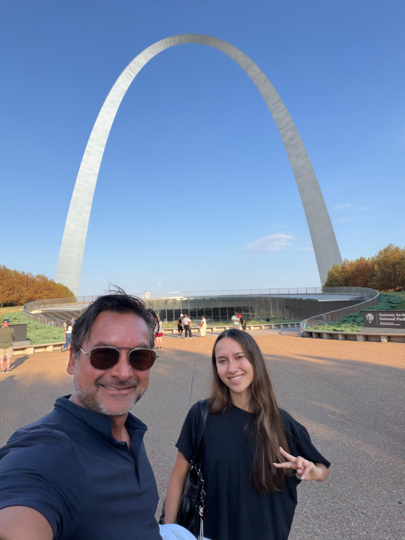
I brought my daughter with me. She is heading off to college soon, so the trip gave us a chance to mix a little business with some father-daughter exploration. We rode to the top of the Gateway Arch, ate some truly excellent barbecue at Pappy’s Smokehouse and, somewhere in between, she watched me take the stage to talk about how companies can change the game.
In retrospect, her interest in psychology made her a particularly fitting companion.
Because one of the biggest ideas I took away from the Great Game gathering is fundamentally about human behavior: People behave differently when they feel like owners.
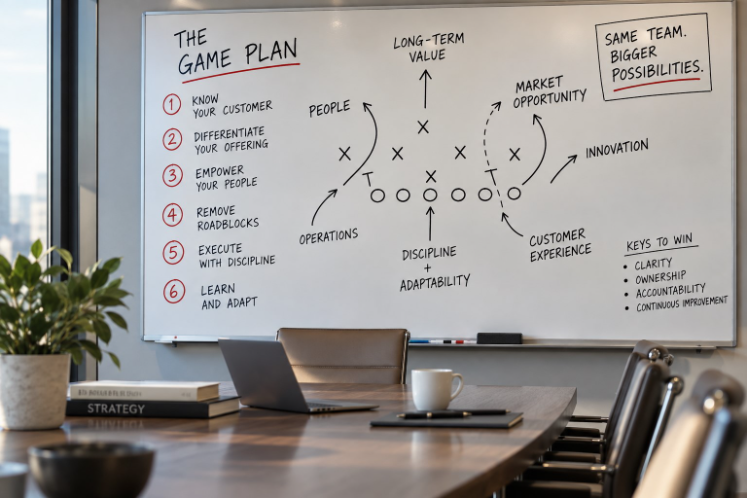
Put People in the Game
Jack Stack, founder and CEO of SRC Holdings and co-author of The Great Game of Business, is widely known for pioneering open-book management and employee ownership practices. He has spent decades advancing a deceptively simple idea: If you want employees to think and act like owners, you have to actually let them into the game.
That means teaching them how the business works. Letting them see the score. Helping them understand how their decisions change that score. Holding them accountable for the results. And, critically, giving them a stake in the outcome when the company succeeds.
My research outlined in this Harvard Business Review article shows that companies whose employees feel like “intrapreneurs” have a 6X advantage in their ability to recruit and retain top talent and 3X advantage in their overall financial performance.
It is not transparency for transparency’s sake. Opening the books without helping people understand the numbers changes very little. The Great Game model combines education, empowerment and reward so employees become participants rather than spectators.
That distinction matters.
We often tell people we want them to “think like owners,” while structuring their jobs so they have little agency to make meaningful decisions, limited visibility into why those decisions matter and no direct connection to the value they help create.
That is asking someone to play like an owner while treating them like a renter.
Real ownership creates both agency and accountability. You have the freedom to influence the outcome, but you also own your part in producing it.
And once you adopt that mindset, another interesting thing happens: people begin questioning the rules of the game itself.
What If “How It’s Done” Is the Problem?
In my GGOB keynote, I shared a framework I use to help leaders challenge conventional strategy: the 9 Ps.
Every business makes choices across nine dimensions: positioning, product, pricing, placement, promotion, physical experience, processes, people, and purpose. The temptation is to look at how successful competitors operate and adopt the accepted best practice for each.
But best practice often means doing things exactly the way everyone else does them.
Breakthrough companies ask a different question: What if the intuitive choice is not our best choice?
I’ve recently written about my podcast with Ron Johnson and his visionary work with Apple’s retail strategy. This is one of my favorite examples because the company did not just break one convention. It broke conventions across virtually the entire business model.
My 9 Ps framework contrasts the industry’s “intuitive choice” with the choices Apple made instead. It’s clear that Apple decided to do things in an entirely different way, blazing a new trail:
- Positioning: Computer retailers sold to computer users. Apple targeted people who were still too intimidated by computers to buy one.
- Product: Others just sold machines. Apple also sold help through classes, advice and the Genius Bar.
- Pricing: Retailers relied on discounts, rebates and negotiation. Apple maintained consistent pricing while giving away much of the help surrounding the product.
- Placement: Computer stores (e.g., CompUSA) traditionally occupied lower-cost destination locations, figuring it didn’t make economic sense to pay high rents for a product category that people only purchased once every few years. Apple went into the busiest malls, where the non-users it wanted to reach already were. As Ron explained, it made more sense to ask people to walk 10 feet to try out a computer than to drive 10 miles.
- Promotion: Advertising was supposed to create demand. Apple made the store itself an advertisement.
- Physical experience: Electronics retailers packed stores with inventory and checkout counters. Apple created open spaces where people could touch, explore and learn.
- Processes: Customers were typically handed from one specialist to another at other retailers. Apple designed the experience so one person can stay with a customer throughout the journey (the same person welcomes you, helps you choose, and checks you out).
- People: Retailers hired technical experts paid on commissions. Apple looked for people their customers could relate to (teachers, students, retirees) and removed the commission incentive.
- Purpose: The conventional goal was to sell products profitably. Apple framed the store around enriching people’s lives, with the transaction becoming a consequence rather than the entire purpose.
Any one of those decisions could look unusual on its own.
Together, they created an interconnected system.
Competitors could copy the tables, the glass, the blue shirts or the Genius Bar. What was much harder to copy was a set of mutually reinforcing choices built around a fundamentally different idea of who the customer was and what that customer needed.
Ownership Is More Than Equity
The connection between Apple and GGOB is not that Apple followed Jack Stack’s playbook.
It is that both recognize how much more people can contribute when they are trusted to do more than execute a narrow role.
Apple hired people who could relate to customers, not just people with deep technical expertise. It gave those employees the agency to stay with customers throughout the journey rather than handing them from one department to another. And it connected their work to a purpose that was easy to understand: enriching lives, not simply closing a sale.
That combination matters.
When people understand who they are serving, have the freedom to help them and can see how their work contributes to a larger purpose, their role changes. They are no longer simply carrying out a process. They become active participants in creating the experience and the outcome.
The Great Game of Business approaches that idea from a different angle. It gives employees greater visibility into how the business works, helps them understand the score and connects their own decisions to the company’s performance.
In both cases, people are invited further into the game.
Ownership asks more of them. It requires people to understand the business, recognize how their choices affect the outcome and take responsibility for what happens next.
But it also gives them more: more context, more visibility, more agency and more opportunity to influence the result.
And that is where the idea becomes strategically powerful.
The people closest to customers, products and operations often see things senior leadership cannot. When they understand the larger objective and have the freedom to act on what they see, they can do far more than execute the system they inherited. They can help improve it.
So here is the question I left St. Louis thinking about: Where in your business are people still playing by rules no one has stopped to question?
Look across your own 9 Ps. Maybe your opportunity is hiding in who you target. How you price. Where you sell. Who you hire. How work gets done. Or even what you believe the business exists to accomplish.
Then ask the people closest to that part of the business what they would change if they had more visibility, more agency and greater ownership of the outcome.
You may discover that the next great strategy is already inside your company.
You just need to get more people into the game.
Learn how to play the game differently by joining Outthinker today.