
Listen to an AI audio recording of this newsletter
London has a way of energizing me, especially when it’s filled with people who are passionate about ideas, innovation, and the future of business.
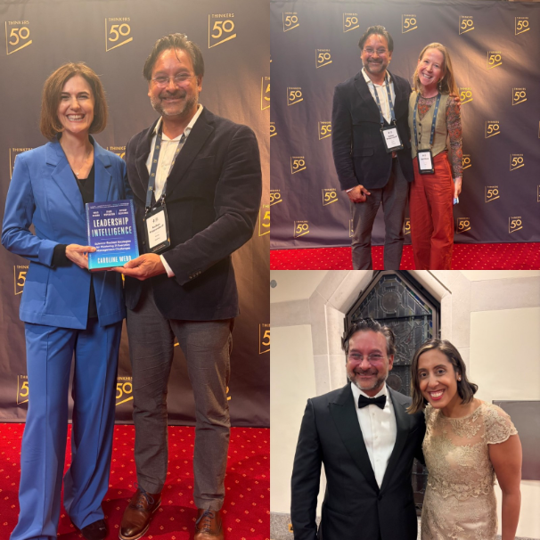
I was there last week for the Thinkers50 Awards and an Outthinker Roundtable, reconnecting with old friends, meeting fascinating new people, and talking with some of the brightest minds in business. It was extraordinary.
One of the highlights was reconnecting with many people, including Caroline Webb, who brings behavioral science to leadership and performance; April Rinne, an expert on navigating uncertainty; Erica Dhawan, author of Digital Body Language and a leading voice on collaboration; and my friend Marcus Collins, whose work explores the power of culture to shape human behavior. I’ve had the privilege of interviewing each of them over the years, and it was wonderful to share this experience together, exchanging ideas, catching up, and enjoying the energy of London.
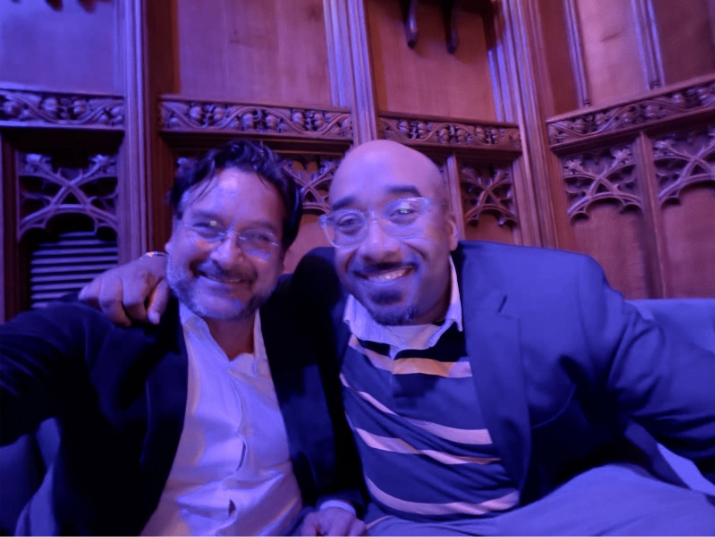
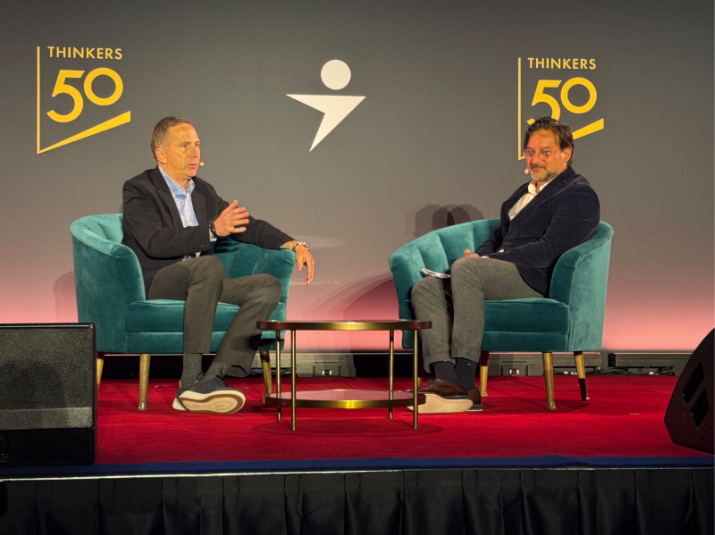
I also had the opportunity to interview Kevin Nolan, CEO of GE Appliances, whose approach to innovation and organizational transformation has helped reshape a traditional manufacturing business.
The conversations were wide-ranging, the perspectives refreshing, and the energy contagious. But amid all the excitement, one particular insight has stayed with me:
Sometimes the greatest constraint on a company’s strategy isn’t what it can do. It’s how long its capital is willing to wait.
That idea first caught my attention during the Thinkers50 Awards, when Jesper Brodin, former CEO of IKEA, shared a fascinating example of what makes bold strategic bets possible.
It surfaced again during my Thinkers50 session with Nolan as we explored the challenge of making long-term decisions in a short-term world. Nolan framed investments as bets on serving customers better, offering another perspective on how leaders can commit to a long-term vision while remaining flexible in how they achieve it.
The Courage to Make Two Big Bets
Brodin described how IKEA embarked on two enormous transformations simultaneously: a digital transformation and a sustainability transformation.
Both required substantial investment, organizational commitment, and years before the returns would become clear. Neither came with a guarantee of success.
Most companies would struggle to justify one transformation of that magnitude, let alone two.
So what gave IKEA the confidence to move forward?
The answer wasn’t simply visionary leadership or a compelling business case.
It was ownership.
IKEA’s foundation-based ownership structure gives the company the freedom to make decisions with a longer time horizon, without the same quarterly pressures facing many publicly traded companies.
That patience created room for ambition.
And the results Brodin shared were remarkable: IKEA grew revenue by 24% while reducing carbon emissions by 30%.
Consider what that means. Growth typically comes with a larger environmental footprint. More products, more operations, more activity. Yet IKEA managed to move those two measures in opposite directions.
It wasn’t just a sustainability achievement. It was evidence of what becomes possible when a company’s strategy and its ownership structure support the same long-term ambition.
Sustainability is often framed as something companies must balance against their financial ambitions. Doing more for the planet, the thinking goes, means accepting higher costs, slower growth, or reduced profitability.
The Strategic Variable We Overlook
As strategists, we spend enormous amounts of time analyzing customers, competitors, market dynamics, and organizational capabilities.
We ask where the opportunities are, what advantages we can build, and how we can position ourselves to win.
But Brodin’s story reminded me of another variable that deserves a place in those conversations: our investors.
Who owns the business? What do they expect? How much uncertainty are they willing to tolerate? And perhaps most importantly, how long are they prepared to wait?
These aren’t simply financial questions. They’re strategic ones.
The most promising opportunities often require investments whose returns are difficult to predict and even harder to deliver on a quarterly schedule.
A company might have the talent, technology, and market opportunity to pursue a transformative idea, yet still lack the ownership alignment necessary to see it through.
And that raises a bigger question: Are we designing strategies around the opportunities we see, or around the expectations of the capital supporting them?
An Idea Worth Sharing
As I continued my conversations in London, I was struck by how often the most valuable insights come from challenging an assumption we’ve stopped questioning.
We tend to think of ownership and capital structure as the conditions within which strategy operates.
But what if we treated them as part of the strategy itself?
IKEA’s experience offers a compelling reminder that bold thinking requires more than bold ideas. It requires an environment that gives those ideas time to succeed.
So here’s a question worth bringing to your next leadership conversation:
If your investors were willing to wait twice as long for a return, what strategic opportunities would suddenly become possible?
It’s one of many ideas I took away from London. And perhaps it’s fitting that we had these conversations at Thinkers50, an organization born from the same kind of bold, long-term thinking. Twenty-five years ago, Stuart Crainer and Des Dearlove had the vision to create a community where great thinkers could challenge assumptions, exchange ideas, and inspire one another.
A quarter century later, they’ve built something extraordinary. I’m grateful to be part of this remarkable community, and even now that I’m back home, I find myself reflecting on the inspiring conversations, fresh perspectives, and new ideas that made this year’s gathering so memorable.
Join today and discover how Outthinker helps connect leaders, challenges assumptions, and uncover new opportunities.