

Listen to an AI audio recording of this newsletter
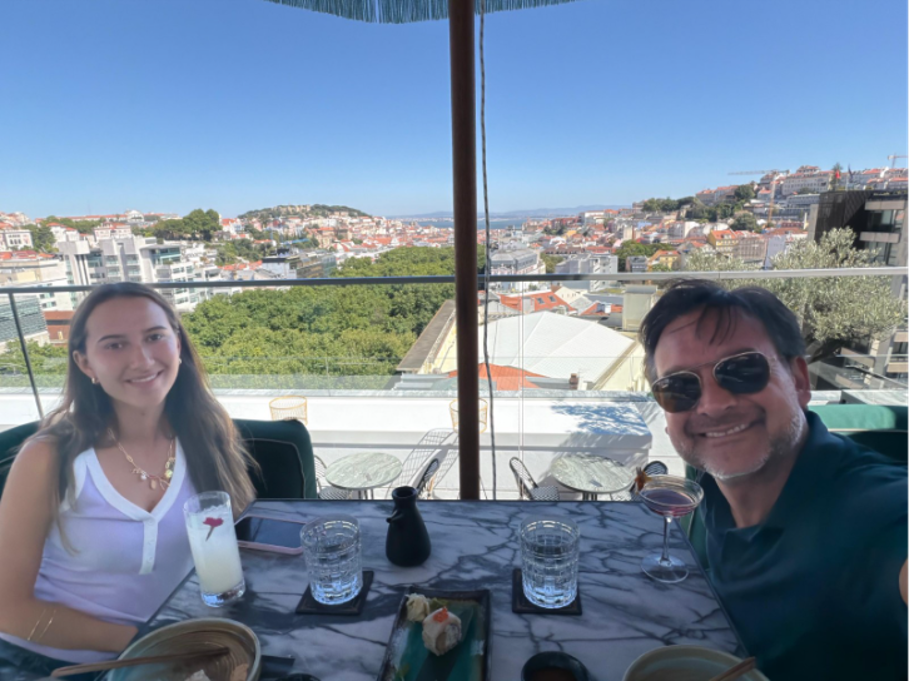
Last week, I had lunch with my daughter in Lisbon.
It was one of those moments that seems ordinary while it’s happening but feels increasingly meaningful as your children grow older. A few hours carved out between flights, meetings, and speaking engagements while my daughter happened to be on a European tour with classmates. Nothing scheduled beyond good food and conversation.
One of the unexpected gifts of my work is that it takes me around the world. Over the years, I have had the opportunity to work with leaders across industries and continents, helping organizations navigate disruption, uncover new sources of competitive advantage, and rethink what is possible.
People often assume the best part is standing on a stage or visiting interesting places.
Those experiences are certainly rewarding.
But after all these years, what I value most are the conversations.
The chance to sit across from someone who sees the world differently. To exchange ideas. To challenge each other’s assumptions. To discover something neither of us would have arrived at alone.
In fact, many of the ideas my daughter and I discussed over lunch had been on my mind since a few days earlier in New York, where 45 chief strategy and transformation officers gathered for an Outthinker Summit.
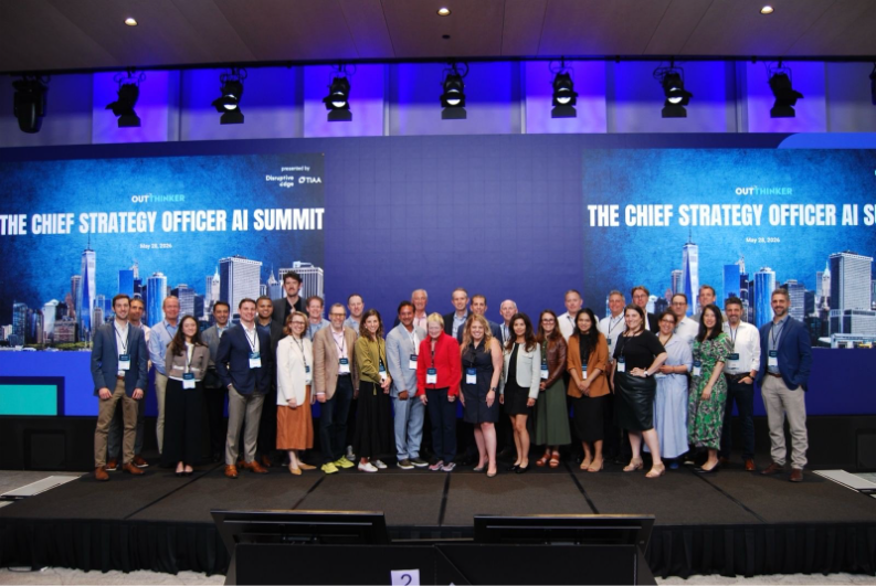
In the days surrounding the summit, I found myself in conversations with executives wrestling with growth, disruption, AI, talent, and transformation. Different companies. Different challenges. Yet the same pattern kept emerging: the most important breakthroughs rarely come from having the right answers. They come from asking better questions together.
That is what makes an Outthinker Summit different.
The room is designed not to absorb intelligence but to create it.
When dozens of experienced leaders openly share what they are seeing, testing, and learning, something remarkable happens. Ideas collide. Patterns emerge. Assumptions are challenged. New possibilities become visible.
I am still processing everything that came out of our most recent gathering, but several themes stood out.
1. Synthetic research is poised to dramatically accelerate innovation.
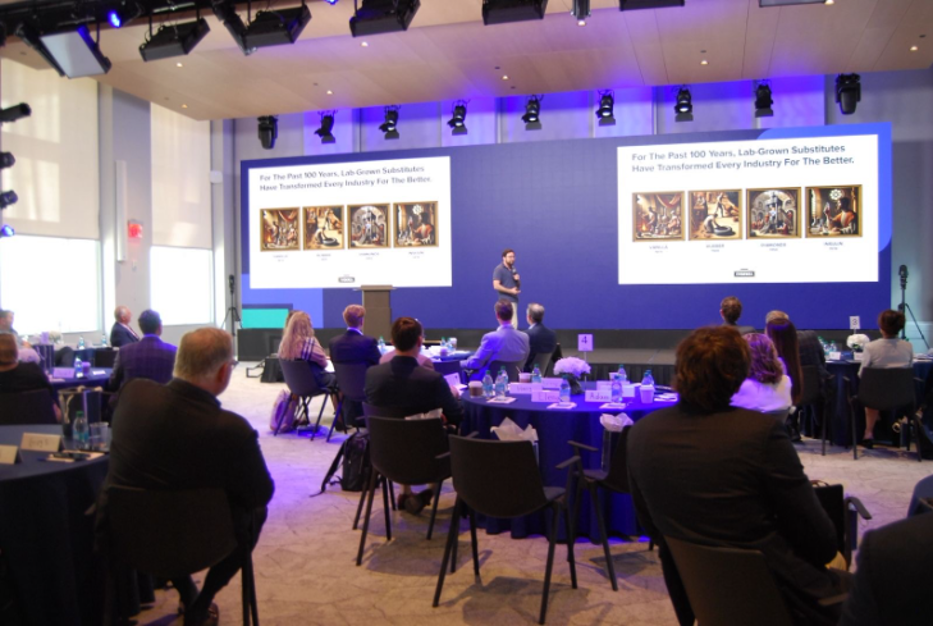
Organizations can now test ideas, pressure test assumptions, and explore strategic options at a speed that would have been unimaginable just a few years ago. A medtech company can evaluate new product concepts before investing millions in development. A retailer can simulate customer responses before launching a new offering. The cost of experimentation is collapsing.
2. Competitive advantage is shifting from access to information toward interpretation and decision making.
Powerful AI tools are becoming available to everyone. The differentiator is no longer who has access to the technology. It is who asks better questions, who learns faster, and who is willing to challenge their own assumptions.
Several leaders shared examples of how AI is helping their teams explore opportunities that would have been too costly, too time consuming, or simply too difficult to investigate in the past. The result is not just faster innovation. It is a fundamentally different approach to strategy, one where organizations can test, learn, and adapt at a pace that was previously impossible.
3. Human connections are more valuable than ever.
But perhaps the most important insight was also the simplest.
For all the discussion about artificial intelligence, the most valuable moments of the summit had nothing to do with technology.
None of the breakthrough ideas emerged from a prompt.
They emerged from people.
One executive shared a challenge. Another offered a perspective from a completely different industry. A third connected the discussion to an experiment underway inside their organization. Within minutes, a new insight had taken shape.
No algorithm orchestrated that exchange.
No software could have predicted where the conversation would lead.
It was the product of human curiosity, experience, trust, and collaboration.
This may be the defining paradox of the AI era.
As intelligence becomes more abundant, human connection becomes more valuable.
When information is available instantly, judgment matters more. When analysis can be automated, interpretation becomes the scarce resource. When ideas can be generated endlessly, knowing which ideas matter and how to act on them becomes a competitive advantage.
Technology will continue to transform how we work.
But it will not replace why we work.
The organizations that thrive in the years ahead will not be those that simply adopt the latest tools. They will be the ones that combine technological capability with human ingenuity. They will use AI to accelerate learning, not replace it. They will create environments where people can challenge one another, build on one another’s thinking, and discover opportunities that would otherwise remain invisible.
The lunch in Lisbon and the summit in New York may seem unrelated.
But as I reflect on both, I am struck by the same lesson.
The most important breakthroughs in life and business still begin the same way.
With a conversation.
Join Outthinker to connect with leaders who believe the best ideas still emerge through conversation.