
Listen to an AI audio recording of this newsletter
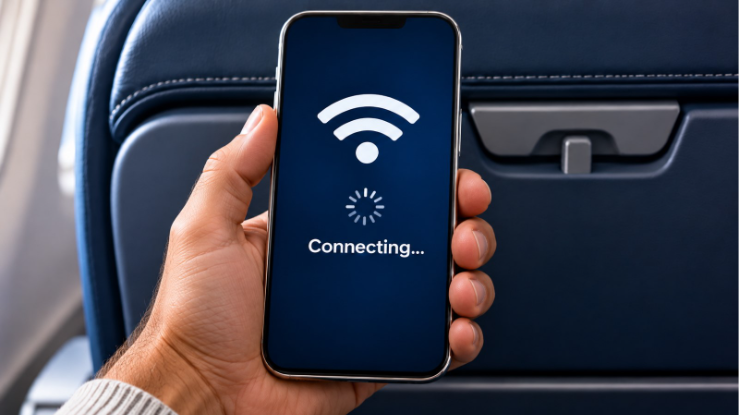
A few days ago, I was sitting on an airplane, frustrated by how slowly the Wi-Fi was working.
Pages were taking too long to load. Emails weren’t sending. Something that should have been simple was suddenly irritating.
Then I considered how absurd that frustration would have sounded a century ago.
One hundred years ago, commercial aviation was still in its infancy. The idea that someone could travel thousands of feet above the ground, connect wirelessly to a global information network, and become annoyed because a message took five seconds to send would have been unimaginable.
Yet here we are.
Yesterday’s miracle has become today’s frustration.
And that simple observation reveals something important about how innovation really works.
Progress Creates Problems
At the recent Thinkers50 gathering in London, I heard Ana Paula Assis, a senior executive at IBM, offer a thought-provoking perspective: Technology exists to solve the problems technology creates.
It sounds almost contradictory. After all, isn’t technology supposed to eliminate problems?
Yes. But there’s another dynamic at work.
Technology continually expands the frontier of what we know to be possible. And every time that frontier moves, it creates a new gap between what we have and what we now know we could have.
That gap is where new problems emerge.
Before wireless connectivity became possible, nobody complained about slow internet access at 35,000 feet. There was no expectation of connectivity, so there was no frustration when it wasn’t available.
But once technology demonstrated that passengers could connect to the internet in flight, expectations changed. Connectivity, initially a surprise, became a feature, then an expectation, then something passengers judged by its speed and reliability.
The innovation didn’t simply solve a problem. It created the conditions for an entirely new set of problems to exist.
We’re watching this process unfold across industries. Artificial intelligence is changing what employees expect from software. Digital payments have transformed expectations around convenience and speed. Advancements in healthcare are changing what patients believe should be possible.
Each breakthrough changes our definition of what’s possible. And each new possibility reveals another gap worth closing.
The Problem with Solving Today’s Problems
This has profound implications for how organizations approach innovation.
Most companies have become reasonably good at identifying existing customer frustrations. They conduct surveys, organize focus groups, analyze complaints, and ask customers what they wish worked better.
These are valuable activities. Understanding current needs matters.
But they also have a fundamental limitation.
Customers can tell you what frustrates them about the world they know. They are much less equipped to describe what will frustrate them about a world they haven’t yet experienced.
An airline passenger a century ago wouldn’t have asked for faster in-flight Wi-Fi. They couldn’t have imagined needing it.
If your innovation strategy focuses exclusively on today’s customer problems, you risk competing to improve experiences that tomorrow’s technology will replace.
The most forward-thinking innovators begin somewhere different. They imagine how the world might work tomorrow, then identify the problems that must be solved to make that future possible.
Innovate Backward from the Future
Consider Tesla.
When the company introduced the Model S in 2012, it wasn’t simply imagining a better electric vehicle. It was envisioning a future in which electric cars could become a practical alternative to gasoline-powered transportation.
But that future came with a challenge: How would people travel long distances without the convenience of gas stations?
Rather than waiting for widespread adoption to magnify the problem, Tesla launched its Supercharger network alongside the Model S, beginning to build the infrastructure necessary to support its vision.
Apple demonstrated similar foresight with the Genius Bar.
When I interviewed Ron Johnson, who worked alongside Steve Jobs to create the Apple Store, he explained how traditional computer retailers kept technical support out of sight, away from customers browsing the showroom.
Johnson saw the opportunity differently. As personal technology became more central to everyday life, people would need accessible, reassuring support. Rather than hiding the frustrations associated with owning a computer, Apple made solving them a visible part of the customer experience.
The Genius Bar became a defining feature of Apple Retail, helping customers feel more confident embracing technology.
Both Tesla and Apple looked beyond the immediate product to consider what customers would need as their envisioned futures became reality.
The greatest opportunities for innovation often emerge not from what customers are missing today, but from what they will come to expect tomorrow.
Three Questions Worth Asking
Most strategic planning exercises begin with the existing market. We study customers, analyze competitors, and look for unmet needs that we can address.
But what if we also considered the problems that don’t yet exist?
The next time your team gathers to discuss innovation, try asking three different questions:
1. What is becoming possible that wasn’t possible before?
Look at emerging technologies, changing behaviors, and new business models that are expanding the boundaries of what customers can expect. Which possibilities could fundamentally change how people live, work, or interact with your business?
2. If those possibilities become commonplace, what new frustrations will emerge?
Imagine your customers living in that future. What will they expect to happen effortlessly? What new obstacles, inconveniences, or unmet needs might appear?
3. What would we need to solve today to succeed in that future?
Work backward. Identify the capabilities, partnerships, infrastructure, or business models that could help your organization address emerging needs before they become widespread frustrations.
The purpose isn’t to predict the future perfectly. It’s to recognize that innovation changes not only what we can do, but also what we expect.
And those changing expectations create new opportunities for growth.
The Next Miracle
The history of innovation is filled with extraordinary achievements that eventually became everyday expectations.
We stopped marveling at the ability to fly and started complaining about delayed flights. We stopped celebrating instant access to information and started expecting answers before we finished typing our questions.
That’s not evidence that innovation has failed. It’s evidence that progress is continuing.
The greatest innovators don’t wait for tomorrow’s problems to become today’s complaints. They imagine what tomorrow could look like, identify the gaps that future will create, and start closing them before everyone else sees them.
Because today’s miracles will inevitably become tomorrow’s expectations.
And the next great opportunity may be hidden in a problem that doesn’t exist yet.
Reimagine what’s next and solve problems that don’t yet exist by joining Outthinker today.